
Key takeawaysTL;DR
- Sea + Express and Sea + Truck share the same ocean leg and differ at the U.S. end: Sea + Express hands cartons to a parcel carrier for delivery, while Sea + Truck delivers pallets or full truckloads into Amazon warehouses by truck.
- Truck deliveries to Amazon warehouses by non-partnered carriers must be booked in advance; the bill of lading must show the Amazon reference number, shipment ID and carrier tracking number, and trucks arriving without an appointment will be turned away.
- Amazon Freight is Amazon's freight brokerage business, offering FTL, LTL and intermodal services; since April 2025, its LTL service has been open to inbound shipments bound for Amazon facilities.
- SPN is Amazon's network of vetted third-party service providers; FIST is Amazon's FBA Inbound Shipment Tracking system, and all FIST carriers support syncing first-mile tracking to Seller Central.
- Amazon will not act as the importer of FBA inventory; the seller or its forwarder must be listed as the importer (IOR) on customs documents.
01What Makes Up FBA Inbound Freight
FBA inbound (first-mile) freight is the first leg of transport that moves goods from a factory or warehouse in China into an Amazon fulfillment center (FC). It generally includes four stages: consolidation and export declaration in China, international transport, U.S. import clearance, and delivery to the FC within the U.S. Terms such as Sea + Express, Sea + Truck, trucking and Amazon Freight differ mainly in the final FC delivery stage.
Two basic rules apply to the U.S. import stage. First, Amazon has stated on its seller forums that, regardless of shipment size or value, Amazon will not act as the importer of record (IOR) for FBA inventory; the seller or its forwarder must be listed as the importer on customs documents and bears the corresponding legal responsibility. Second, the ISF (Importer Security Filing, commonly called “10+2”) rules of U.S. Customs and Border Protection (CBP) apply to goods entering the U.S. by sea.
02Sea + Express vs. Sea + Truck
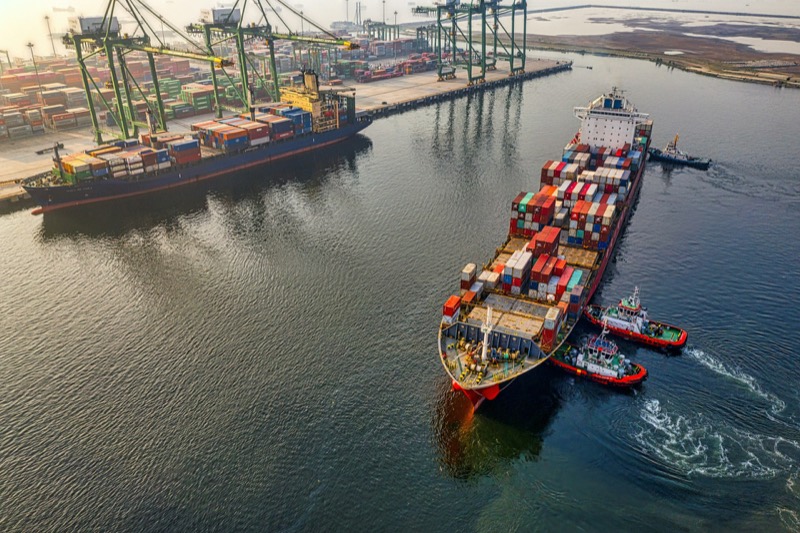
Sea + Express means “ocean freight + parcel delivery”: after the goods arrive in the U.S. by sea, the container is devanned and sorted, and cartons are handed individually to a parcel carrier network for delivery to Amazon warehouses. Sea + Truck means “ocean freight + truck delivery”: after devanning, goods are delivered to the FC by truck as pallets or full truckloads. The ocean leg is the same; the difference lies in the billing unit, tracking method and appointment requirements at the final stage.
In Amazon's system, these correspond to two modes: small parcel delivery (SPD) and pallet shipments (LTL or FTL). According to Amazon's Selling Partner API documentation, when you use your own carrier, small parcel shipments require a carrier tracking number to be uploaded for every box in the inbound plan, pallet shipments require the carrier-provided freight bill number (commonly called the PRO number in the LTL industry), and a delivery window must be confirmed for every shipment.
- Sea + Express: suited to shipments with fewer cartons where each carton can be delivered on its own, or to an inbound plan split into several shipments for different FCs.
- Sea + Truck: suited to shipments with many cartons that can be palletized; Amazon's official blog describes LTL as suited to multiple pallets that don't fill a full truck.
- When a full container's worth of goods is going to a single destination FC, consider direct FTL delivery.
03U.S. Truck Delivery to Amazon: FTL, LTL and Appointments
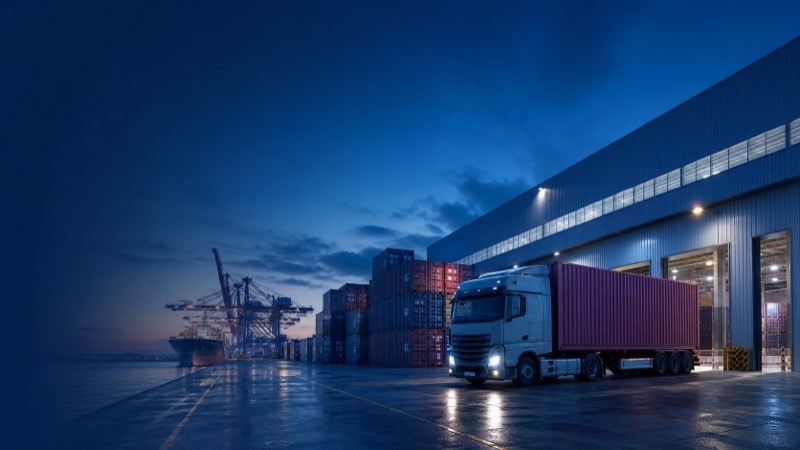
Trucking means delivering goods into Amazon warehouses by truck within the U.S., either FTL (Full Truckload, a dedicated truck) or LTL (Less Than Truckload, sharing trailer space with other shippers). The main difference between trucking and parcel delivery is the appointment: Amazon's official blog explains that when using a non-partnered carrier, the seller or carrier must book a delivery appointment in advance, the bill of lading (BOL) must show the Amazon reference number, shipment ID and carrier tracking number, and trucks arriving without an appointment will be turned away.
When you book a truck in Seller Central through Amazon's Partner Carrier Program (PCP), Amazon schedules the delivery slot at the destination FC for you; the program serves the 48 contiguous U.S. states, and its partnered carriers include Amazon Freight.
For pallets, the requirements listed on Amazon's official U.S. seller blog include: 40 × 48 inch, four-way-entry wooden pallets (GMA standard Grade B or higher); cartons stacked neatly with FBA box labels facing out; secured with clear stretch wrap; and pallet labels on all four sides of each pallet. Before shipping, follow the current rules in Seller Central.
04What Are Amazon Freight, SPN and FIST?
Amazon Freight is Amazon's freight brokerage business, operated by the licensed freight broker Amazon Logistics, Inc., offering FTL, LTL and intermodal services. Since April 2025, its LTL service has been open to inbound shipments bound for Amazon facilities. For sellers, it is a trucking channel for moving cleared goods from a U.S. port or warehouse into Amazon FCs.
SPN (Service Provider Network, Amazon's network of service providers) connects sellers with third-party service providers vetted by Amazon. Its International Shipping category offers sellers cross-border logistics, freight forwarding and customs clearance services; providers must pass identity verification, a policy compliance review and a capability assessment, and sellers can find them on the SPN provider page in Seller Central. Shipping-category providers can also use Amazon's fulfillment center appointment tool to book inbound slots for sellers' shipments.
FIST (FBA Inbound Shipment Tracking, also called the “FBA first-mile smart system” on Amazon's pages) is a supplementary first-mile logistics solution from Amazon, integrated with the systems of multiple third-party carriers. Its ShipTrack component (technical integration for FBA shipment tracking) applies to all FIST carriers: it syncs milestones such as dispatch, departure, arrival, customs clearance and FC delivery, automatically syncs tracking numbers and displays them together in Seller Central, and inbound defects caused by inaccurate tracking numbers can be waived. Delivery Window Automation (DW Automation) and Smart Reroute (SR) apply only to carriers that have launched those two features. The FIST carrier list changes in part on the 20th of each month. According to Amazon's official statement on its seller forums, for shipments from China to the U.S., choosing “Use your own carrier” at the carrier selection step of the Send to Amazon workflow shows the available ShipTrack carriers.
05Pre-Shipment Checklist and How to Choose
Choosing a first-mile method starts with two things: volume determines whether the final leg goes by parcel carrier or truck, and transit-time requirements determine whether to go by ocean or air. Shipments with few cartons that need to go to several FCs can favor Sea + Express; shipments with many cartons that can be palletized suit Sea + Truck LTL; full containers bound for a concentrated destination FC can go by direct FTL; for palletized goods where you want Amazon to schedule the unloading slot, book the truck through the Partner Carrier Program; small, time-sensitive replenishments can switch to air.
The checklist below covers the steps in Amazon's rules where problems often occur; specific dimension and weight limits follow the current version in Seller Central.
- Apply one FBA box label printed from the shipment workflow to each carton; each label is unique and cannot be photocopied or reused. For small parcel shipments, each carton also gets a carrier shipping label; put both labels on a flat surface.
- Cover old barcodes on cartons with opaque tape or black them out with a marker to avoid mis-scans at receiving.
- Product labels (FNSKU) must be clear and scannable; Amazon does not accept damaged or photocopied labels.
- Check carton dimensions and per-carton weight against the shipping requirements in Seller Central, carton by carton.
- Build pallet shipments on 40 × 48 inch wooden pallets with pallet labels on all four sides.
- When using your own carrier, upload tracking numbers per carton or the pallet freight bill number, and confirm the delivery window; book truck deliveries in advance.
06How Yunxiang International Does It
Zhejiang Yunxiang International Freight Forwarding Co., Ltd. (浙江云象国际货运代理有限公司), known as Yunxiang International, is an Amazon SPN logistics provider and an Amazon FIST carrier, providing U.S. FBA inbound freight. As a FIST carrier, Yunxiang International lets sellers view first-mile shipment tracking in Seller Central for the FBA shipments it carries; Delivery Window Automation and Smart Reroute are live only for some FIST carriers, so please confirm availability with Yunxiang International before shipping.
For the ocean leg, Yunxiang International has direct contracts and tier-1 agency with Matson, Hede and Evergreen, plus channels with ZIM and other carriers, with Sea + Express and Sea + Truck delivery options. In China, it has warehousing hubs in Yiwu, Ningbo, Hangzhou and Shenzhen totaling 20,000+ m², and the Ningbo warehouse is near Ningbo-Zhoushan Port.
For the U.S. leg, Yunxiang International has 3 company-owned customs brokerages in the U.S. and handles importer registration, ISF and AMS (Automated Manifest System) filings in one place; FC delivery can go by truck across 48 states (FTL and LTL) or through the Amazon Freight delivery channel; its own warehouses in Los Angeles and New York handle transit labeling and Amazon returns relabeling. Call +86 135 8834 3067 / +86 185 5790 5889 (Mon–Sat 09:00–18:00, China time, UTC+8).
FAQFAQ
It depends on the carton count and whether the goods can be palletized. Sea + Express is ocean freight plus carton-by-carton parcel delivery, suited to shipments with few cartons or that need to go to several Amazon FCs; Sea + Truck is ocean freight plus truck delivery to the FC, suited to shipments with many cartons that can be palletized, and truck delivery by a non-partnered carrier requires an advance appointment. Yunxiang International offers both, so you can choose based on how your inbound plan is split across FCs.
A FIST carrier is a third-party carrier connected to Amazon's FBA Inbound Shipment Tracking system (FIST). All FIST carriers support ShipTrack: first-mile milestones such as dispatch, departure, arrival, customs clearance and FC delivery, along with tracking numbers, are synced to Seller Central, and inbound defects caused by inaccurate tracking numbers can be waived; Delivery Window Automation and Smart Reroute are live only for some carriers. Yunxiang International is an Amazon FIST carrier: sellers who use Yunxiang International for FBA inbound freight can view shipment tracking in Seller Central, and whether the other two features are available should be confirmed with Yunxiang International in advance.
Trucks from non-partnered carriers must book a delivery appointment at the Amazon warehouse in advance, and the bill of lading must show the Amazon reference number, shipment ID and carrier tracking number — trucks arriving without an appointment will be turned away. The seller must also upload the freight bill number for pallet shipments in Seller Central and confirm a delivery window for each shipment. Yunxiang International provides FTL and LTL truck delivery across 48 states.
No. Amazon has stated that, regardless of shipment size or value, it will not act as the importer of record (IOR) for FBA inventory; the seller or its forwarder must be listed as the importer on customs documents and bears legal responsibility for the imported goods. Ocean imports also involve CBP's ISF filing. Yunxiang International has 3 company-owned customs brokerages in the U.S. and can handle importer registration, ISF and AMS filings in one place.
Sources
- Amazon Global Selling: Amazon FBA Inbound Shipment Tracking (FIST) carrier list
- Amazon Seller Forums: Track your FBA shipments from China with reliable ShipTrack carriers
- Amazon Selling Partner Developer: Amazon Service Provider Network overview
- Amazon Developer Services: How to join the Amazon Service Provider Network
- Sell on Amazon: Pay less to stock more with Amazon LTL carriers
- Sell on Amazon: Partner Carrier program (PCP)
- Sell on Amazon: FBA prep, packaging, and labeling
- Amazon Seller Forums: Reminder: Shipping label requirements when sending to FBA
- Amazon Freight: LTL inbound launch
- Amazon Freight: Choosing the right Amazon service for your inbound shipping needs
- Selling Partner API: Create a shipment with a non-partnered carrier
- Amazon Seller Forums: Importer of Record for FBA inventory
- CBP: Importer Security Filing 10+2

 Scan with WeChat to add our support team